When Is the Best Time to See the Great Migration in Serengeti?

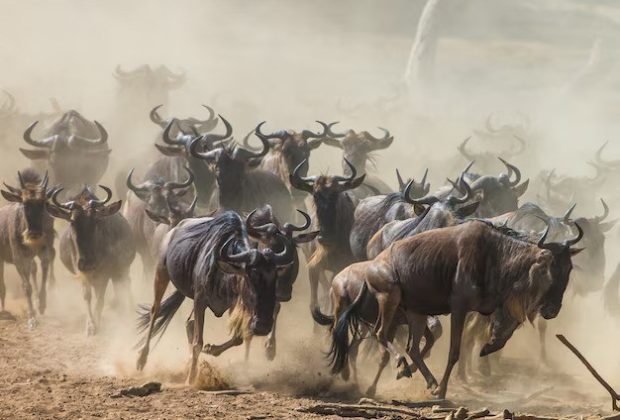
The Great Migration is often described as the greatest wildlife spectacle on Earth. Every year, more than two million wildebeest, accompanied by hundreds of thousands of zebras and gazelles, move across the vast ecosystems of Tanzania and Kenya in search of fresh grazing and water. For many travelers, witnessing this extraordinary event is the main reason for visiting Tanzania.

One of the most common questions safari planners ask is: When is the best time to see the Great Migration in Serengeti?

The answer depends on what part of the migration you want to experience. Unlike many wildlife events that occur at a fixed location, the Great Migration is constantly moving throughout the year. Understanding where the herds are likely to be during different months can help you plan the perfect safari.

Understanding the Great Migration

The Great Migration is not a single event but a continuous cycle driven by rainfall and the search for fresh grazing. The herds move through different regions of the Serengeti ecosystem throughout the year, creating unique wildlife experiences depending on when you visit.

Because the movement is influenced by weather patterns, no one can predict the exact location of the herds months in advance. However, there are general migration patterns that have remained consistent over the years.

Best Time to See the Great Migration in Serengeti

January to March: Calving Season in Southern Serengeti

For many safari experts, this is one of the most rewarding times to visit the Serengeti.

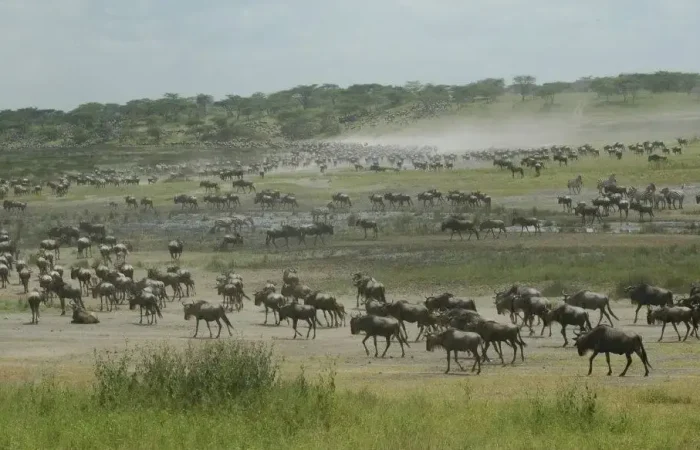
During these months, the herds gather in the southern Serengeti and Ndutu region, where nutrient-rich grasslands provide ideal conditions for giving birth. Nearly half a million wildebeest calves are born within a short period, creating one of nature’s most remarkable spectacles.

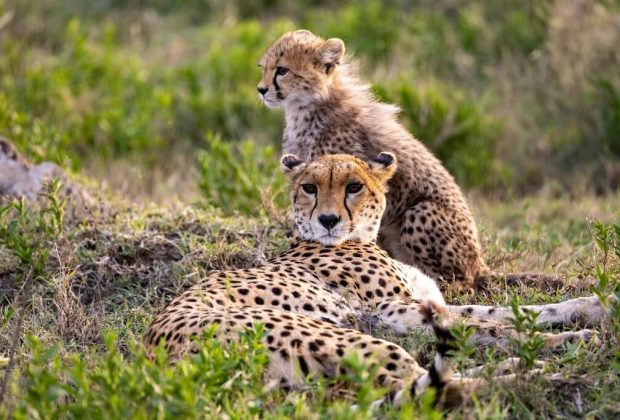
The abundance of newborn animals attracts predators such as lions, cheetahs, hyenas, and leopards, making this an exceptional season for wildlife photography and predator action.

While many travelers focus on river crossings, the calving season offers a completely different and equally impressive migration experience.

When Is the Best Time to See the Great Migration in Serengeti Ndutu

April and May: The Green Season

As the rainy season progresses, the herds begin moving northwest through the central Serengeti.

This period is often overlooked by travelers, but it offers several advantages. The landscapes are lush and green, visitor numbers are lower, and accommodation prices are often more affordable.

While heavy rains can occasionally affect road conditions, wildlife viewing remains excellent, and photographers often appreciate the dramatic skies and vibrant scenery.

For travelers seeking a quieter safari experience, this can be an excellent time to visit.

June and July: Migration Movement and Grumeti Crossings

By June, the herds are typically moving toward the western corridor of the Serengeti.

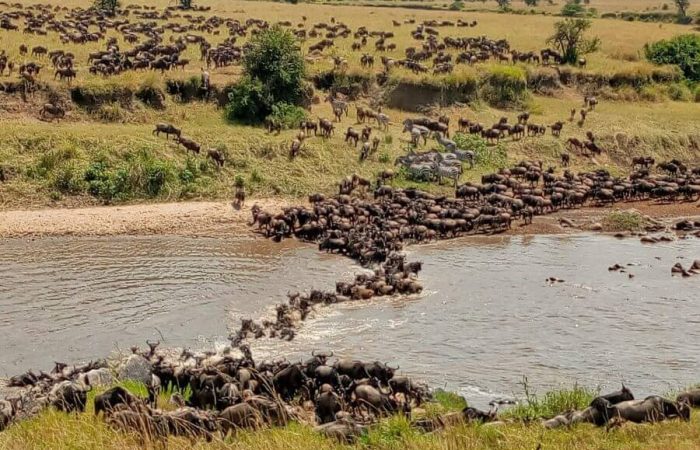
This is when visitors may witness the famous Grumeti River crossings, where wildebeest face strong currents and large crocodiles as they continue their journey north.

Although these crossings are less well-known than the Mara River crossings, they can be equally dramatic and are often witnessed by fewer tourists.

The dry season also begins during this period, improving road conditions and making wildlife easier to spot as animals gather around water sources.

When Is the Best Time to See the Great Migration in Serengeti Crossing

July to October: The Famous Mara River Crossings

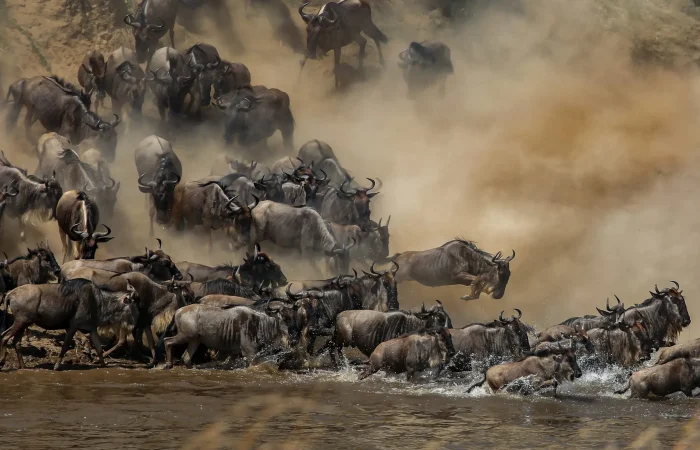
If your dream is to witness thousands of wildebeest plunging into crocodile-filled rivers, this is generally considered the best time to visit.

During these months, the migration reaches northern Serengeti, where the herds attempt to cross the Mara River on their way toward Kenya’s Maasai Mara. These crossings are unpredictable and can occur multiple times as animals move back and forth across the river.

The combination of dramatic river crossings, predator encounters, and dry-season wildlife viewing makes July through October the most popular migration period.

As a result, accommodations in northern Serengeti often book many months in advance, especially during peak season.

November and December: The Journey South Begins

As seasonal rains begin to return, the herds gradually leave the north and start their journey back toward the southern plains.

During this period, large concentrations of wildebeest can often be found moving through central and eastern Serengeti. Wildlife viewing remains excellent, and visitor numbers are generally lower than during the peak river crossing season.

For travelers looking to experience the migration without the crowds, late November and December can be an attractive option.

When Is the Best Time to See the Great Migration in Serengeti

So, When Is the Best Time to Visit?

The truth is that there is no single “best” time to see the Great Migration. The ideal timing depends on the experience you are looking for.

If you want to witness thousands of newborn wildebeest and intense predator activity, January through March is hard to beat. If your goal is to see dramatic river crossings, then July through October offers the greatest opportunity.

Travelers who prefer fewer crowds and lower prices may find April, May, November, or December equally rewarding.

The most important thing is matching your travel dates with the migration experience you want to see.

Beyond the Migration: Why Serengeti Is Worth Visiting Year-Round

While the Great Migration is the Serengeti’s most famous attraction, it is not the only reason to visit.

The park supports one of the highest concentrations of wildlife in Africa throughout the year. Lions, elephants, leopards, cheetahs, buffalo, giraffes, and countless other species can be seen regardless of the migration’s location.

Even when the herds are elsewhere, the Serengeti remains one of the world’s premier safari destinations.

Planning a Great Migration Safari

Because the migration moves throughout the year, choosing the right itinerary and accommodation is essential. Staying in the correct region of the Serengeti during your travel dates can make the difference between occasionally seeing migration herds and experiencing them every day.

Working with experienced local safari specialists ensures that your itinerary is designed around the expected location of the migration rather than simply visiting the Serengeti at random.

When Is the Best Time to See the Great Migration in Serengeti running

Good travel habits often make the biggest difference.

Keep copies of important documents, avoid carrying large amounts of cash, use secure accommodation, and maintain awareness of your surroundings.

Staying informed, preparing properly, and choosing experienced local partners will often do more for your safety than worrying about unlikely scenarios.

CUSTOMIZE YOUR SAFARI

A wide range of tailor-made itineraries that caters to every adventurer’s unique desires and interests. 

Share Article on

WhatsApp
Facebook
Twitter
LinkedIn
VK
Reddit
Email

Other Post

Is Tanzania Safe for Tourists What You Need to Know in 2026

Is Tanzania Safe for Tourists? What You Need to Know in 2026 Tanzania remains one of Africa’s most popular travel destinations, attracting …
How Much Does a Tanzania Safari Cost

How Much Does a Tanzania Safari Cost? Planning a safari in Tanzania is an exciting experience, but one of the first things …
Authentic elephant big five

The Big Five Safari Animals Tanzania’s national parks are home to the incredible Big Five, an awe-inspiring sight that has captivated wildlife …
Wildebeast on motion

The Great Migration in Serengeti Tanzania One of Africa’s most mesmerizing natural phenomena, the Great Migration in Tanzania is a breathtaking spectacle …
Authentic what to park

What to Pack for Your Tanzania Safari We are thrilled to hear that you are embarking on a safari adventure in Tanzania! …
Wet weather Tanzania

Weather in Tanzania In Tanzania, the weather is as diverse as its wildlife. With its location near the equator, you can expect …